
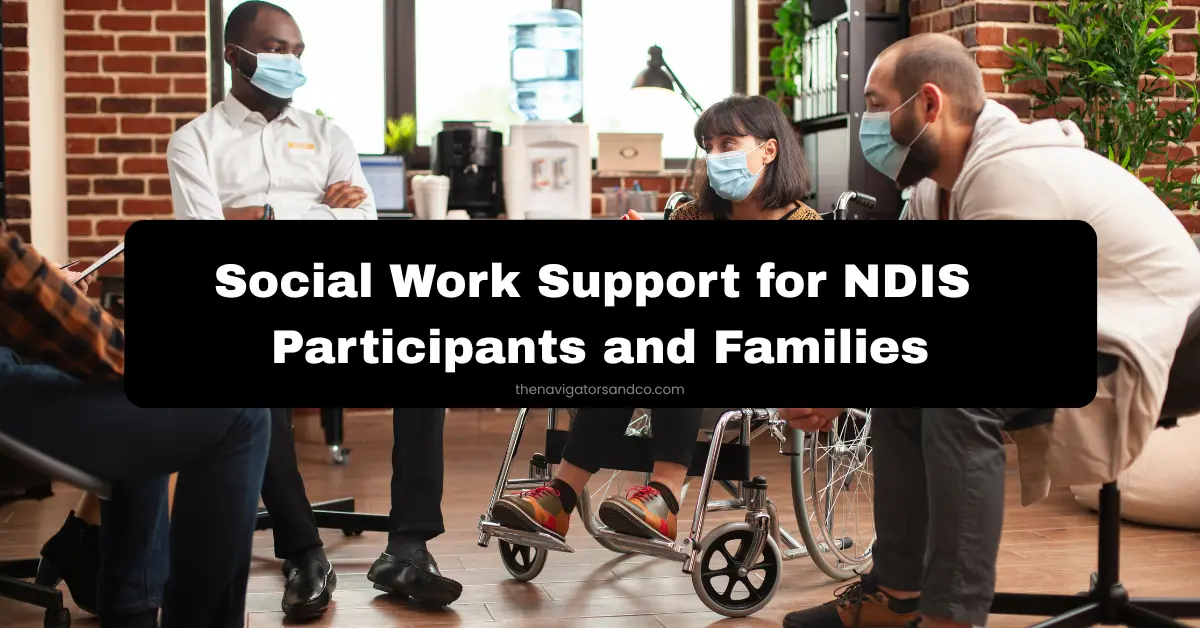
Navigating the National Disability Insurance Scheme (NDIS) can be challenging, particularly for participants with complex needs or multiple systems involved. Social work plays an important role in supporting NDIS participants and their families to understand their NDIS plan, navigate services, and access appropriate, evidence-informed supports, often alongside structured guidance such as NDIS Plan Management.
Social work within the NDIS is grounded in advocacy, capacity building, and systems navigation. It aims to support participants to increase independence, improve quality of life, and work towards goals that are meaningful to them.
What Is Social Work in the NDIS?

Social work in the NDIS involves professional support to assist participants to understand, access, and navigate disability-related supports and broader service systems. The role of a social worker includes, but is not limited to, the following:
- Supporting participants to understand their NDIS plan, funding categories, and how supports can be used across a range of personalised NDIS services
- Assisting people who are not yet NDIS participants to understand eligibility pathways and engage with access processes (where appropriate)
- Supporting participants to connect with suitable registered and unregistered providers, including allied health professionals, therapists, and support workers
- Assisting with access to community participation and mainstream services that support skill development, inclusion, and independence
- Supporting participants and families to understand behaviour support processes, including positive behaviour support and restrictive practices, where these are part of a participant’s plan and governed by legislation
- Working alongside Local Area Coordinators (LACs), Support Coordinators, and other professionals to support coordinated service delivery
- Supporting understanding of participant rights, safeguards, and complaint pathways, including engagement with the NDIS Quality and Safeguards Commission when required
Social workers support participants and families to make informed choices, understand their rights, and navigate complex systems in a way that respects dignity, autonomy, and choice and control.
How Social Work Supports NDIS Participants
1. Collaboration and Working Alongside Stakeholders
Social workers collaborate with Support Coordinators, service providers, families, and other stakeholders to support effective implementation of NDIS supports. This may include contribution to goal-setting, planning for short- and long-term needs, and supporting participants to engage with services in a way that aligns with their goals, including access to Specialist Support Coordination for participants with complex or high-level support needs.
2. Supporting Access to Specialist and Community Services
For participants with higher or more complex support needs, social workers may assist with navigating access to:
- Allied health professionals and therapists for assessments and evidence-informed supports
- Support workers for assistance with daily living, household tasks, and emotional or social support
- Community participation supports that promote social connection, life skills, and inclusion
- Behaviour support services, where funded, to support safe practices and improve quality of life
3. Life Transitions and Change
Social workers support participants through life transitions such as changes in living arrangements, transitions from school to adulthood, or increased community engagement. This support focuses on capacity building, choice and control, and strengthening independence over time, often working in alignment with Support Coordination to ensure continuity of services and goal progression.
4. Advocacy and Safeguards
Social workers provide advocacy support by assisting participants and families to understand NDIS processes, safeguards, and complaint pathways. This may include supporting engagement with the NDIS Quality and Safeguards Commission or other relevant systems where participants’ rights, safety, or wellbeing are impacted.
Benefits of Professional Social Work Support

Engaging professional social work support can offer:
- Evidence-informed, person-centred support tailored to individual and family needs
- Practice guided by the AASW Code of Ethics (2020) and AASW Practice Standards (2023)
- Support navigating both disability-specific and mainstream service systems
- Guidance around social and community participation to promote independence and inclusion
- Support for participants experiencing psychosocial disability, mental health challenges, or complex life circumstances
- Assistance navigating the NDIS system so supports are used appropriately and aligned with participant goals
With qualified social work support, NDIS participants can build confidence, increase understanding of their supports, and strengthen their ability to make informed decisions in line with their goals and values.
Frequently Asked Questions
What is social work in the NDIS?
Professional support to help participants understand, access, and navigate disability-related supports and broader service systems.
How does social work help participants?
It supports understanding of NDIS plans, connecting with providers, and accessing community and mainstream services.
What are the benefits of social work support?
Person-centred, evidence-informed support that promotes independence, inclusion, and informed decision-making.
2 Comments